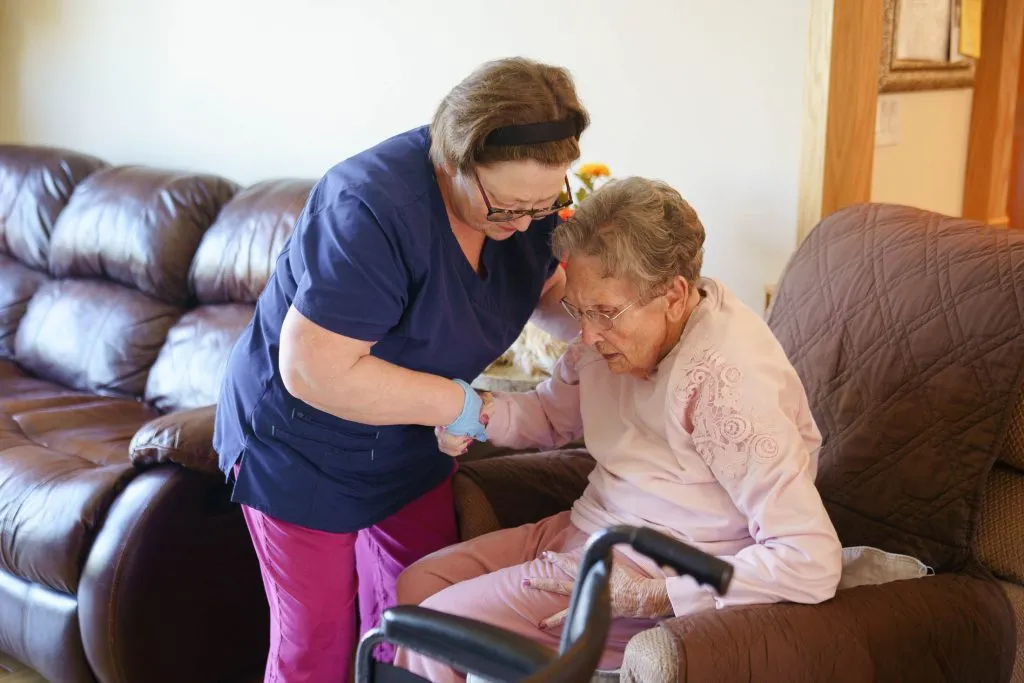
When a parent or loved one begins to need more support than can be managed at home alone, families often find themselves navigating a landscape of unfamiliar terms: nursing homes, assisted living, memory care, adult family homes. The options can feel overwhelming — especially when the decision feels urgent.
So, what exactly is an adult family home?
An adult family home (AFH) is a licensed, private residence where a small number of adults — typically no more than six — receive personal care and support from live-in or on-site caregivers. Unlike a nursing home or assisted living facility, an AFH is a real home in a real neighborhood. Residents live in bedrooms, eat at a dining table, and share common spaces — just like a family.
The State of Washington licenses and regulates adult family homes through the Department of Social and Health Services (DSHS). Caregivers must meet training and certification requirements, and the home is subject to regular inspections.
How is it different from a nursing home?
The biggest differences are scale, atmosphere, and the type of care provided. Nursing homes are large facilities — sometimes housing hundreds of residents — with clinical environments, shift-based staffing, and a focus on medical or skilled nursing care. Adult family homes are small, residential, and personal.
In a six-person adult family home, caregivers know every resident by name, preference, and routine. That's not a figure of speech — it's simply what the math allows.
Nursing homes are best suited for seniors who need complex medical care — wound care, IV therapy, ventilator support. Adult family homes are best suited for seniors who need personal care, companionship, medication management, and daily assistance — but don't require a clinical environment.
What does daily life actually look like?
In a well-run adult family home, days are built around the residents — not the other way around. Mornings include personal care, breakfast, and medication routines. Afternoons might include light activities, visits from family, or rest. Evenings include dinner and wind-down routines. Meals are cooked in the kitchen. Caregivers are present, not behind a nursing station.
Families are welcome — often encouraged — to visit freely. Many families find that the smaller, home-like environment makes it easier to stay involved in their loved one's care than larger facilities.
Is an adult family home right for your loved one?
An AFH is typically the right fit when your loved one needs consistent personal care and companionship, values a home environment over a clinical one, would benefit from consistent caregiver relationships, and doesn't require skilled nursing or complex medical procedures.
If you're trying to decide what's right for your family, the best first step is a conversation — not a commitment. Most adult family homes, including 1st Blessed, welcome families to call, ask questions, and tour the home before making any decisions.